Quick answer (updated August 2026): Choose the Masai Mara (about 1,510 km2) for predator density and the July-to-October Great Migration; choose Tsavo East (13,747 km2, nearly ten times larger) for Africa’s biggest red-dust elephant herds, over 500 bird species, a protected rhino population that makes the Big Five more completable, and a natural stop between Nairobi and the coast.
Kenya’s two flagship safari destinations offer fundamentally different experiences. The Masai Mara is the home of the Great Migration, high-density predator sightings, and a compact ecosystem that rewards short visits. Tsavo East is Kenya’s largest national park — a semi-arid wilderness of red earth, vast elephant herds, and a raw landscape that most travellers underestimate until they are inside it.
Understanding what each park does best is the starting point for making the right choice between them.
Size and Character
Masai Mara National Reserve covers approximately 1,510 square kilometres, with the surrounding private conservancies extending the wildlife zone by a further 1,500+ square kilometres. It sits in southwestern Kenya at 1,500 to 1,900 metres altitude, within the broader Mara-Serengeti ecosystem that stretches south into Tanzania.
Tsavo East National Park covers approximately 13,747 square kilometres — nearly ten times the size of the Mara reserve. Together with adjacent Tsavo West, it forms one of the largest protected wildlife areas in the world. The park lies in southeastern Kenya at lower altitudes, with a hotter, drier climate and a distinctly different character to the high-altitude Mara grasslands.
The size difference has practical consequences. In Tsavo East, wildlife is distributed across a much larger area. Game drives cover more ground per sighting, and the experience can feel more remote and self-contained. In the Masai Mara, the compact ecosystem and concentrated wildlife density mean you encounter animals frequently and with less driving time between sightings.
Wildlife
Masai Mara
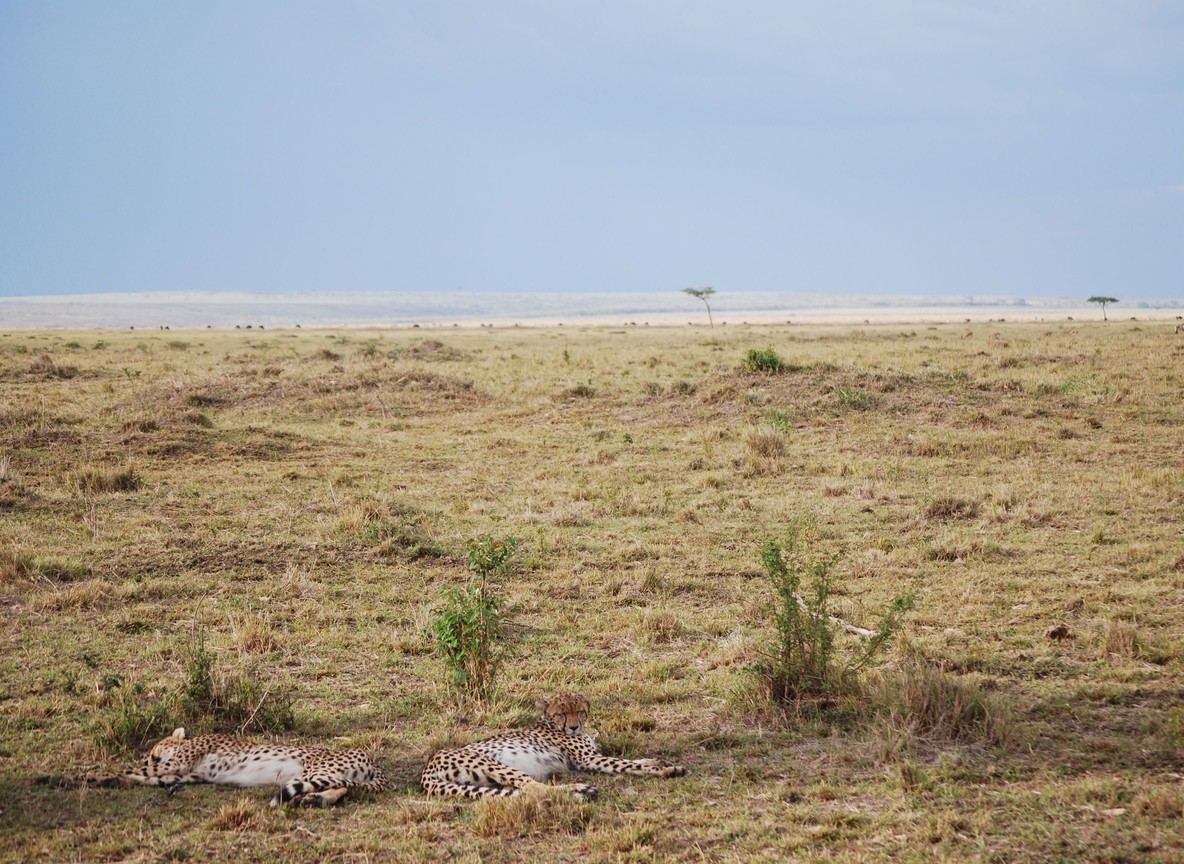
The Mara is defined by predator density, the Big Five, and the annual Great Migration. Several large lion prides with well-documented territories are reliably found by experienced guides. Cheetah sightings on the open plains are among the most consistent in Africa. Leopard are present in good numbers along river corridors. The Mara and Talek rivers support large hippo pods and Nile crocodile populations year-round.
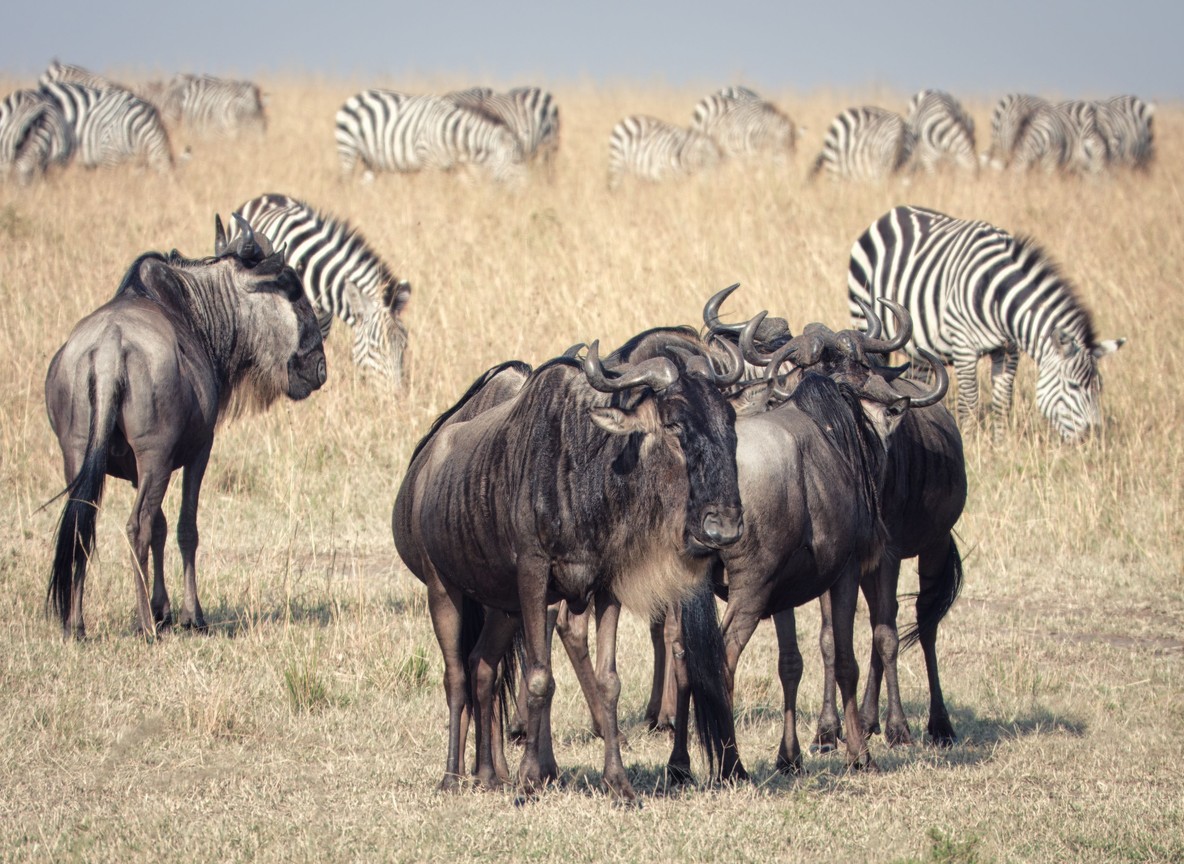
Between July and October, over 1.5 million wildebeest and hundreds of thousands of zebra move through the ecosystem, concentrating on the banks of the Mara River for the iconic crossing events. No other wildlife spectacle in Africa operates at this scale.
Tsavo East
Tsavo East is best known for its elephants. The park holds some of the largest elephant herds in Africa, and they carry the distinctive red dust colour of the park’s volcanic soils — a visual signature found nowhere else. Elephant encounters in Tsavo East involve very large bulls and multi-generational family herds in numbers that exceed anything in the Masai Mara.
Lions are present but less easily sighted. The dense bush and scrub vegetation of Tsavo East means lions spend more time concealed than their Mara counterparts on open plains. Leopard and cheetah exist in the park but require more patience to locate. Buffalo are common along the Galana River corridor, which runs through the southern section of the park.
Rhino deserve particular mention. Tsavo East has a viable rhino population within protected areas of the park, making Big Five completions more achievable here than in the main Masai Mara reserve where rhino sightings are rare.
Birdlife is exceptional. Tsavo East records over 500 species — more than the Masai Mara — and the diversity of habitats from riverine scrub to open plains creates conditions for birds rarely seen elsewhere in Kenya.
The Great Migration does not pass through Tsavo East. The park’s wildlife is predominantly resident year-round, which means visits in any month are broadly comparable in terms of what can be seen.
Wildlife Comparison Summary
| Feature | Masai Mara | Tsavo East |
|---|---|---|
| Great Migration | July-October | Not present |
| Elephant herds | Large | Very large, red-dust colour |
| Lion sightings | Very high frequency | Moderate (dense bush) |
| Cheetah | Consistent, open plains | Present, harder to locate |
| Leopard | Good numbers | Present |
| Rhino | Rare in main reserve | Present in protected areas |
| Big Five | Achievable | More reliably complete |
| Bird species | 450+ | 500+ |
Scenery and Landscape
The Masai Mara offers classic East African savannah: vast open grassland, the Mara River forest corridor, and the elevated Siria Escarpment forming the western boundary. It is the landscape most people picture when they think of an African safari.
Tsavo East is dramatically different. The terrain is semi-arid scrubland and sparse bush over red volcanic soil. The Yatta Plateau — the world’s longest lava flow — runs through the centre of the park, an elevated ridge of volcanic rock stretching for over 300 kilometres. The Galana River cuts through the southern sector, with Lugard’s Falls — a series of narrow gorges worn through smooth rock — providing one of the most distinctive geological features of any Kenyan park.
At sunrise and sunset, the light on Tsavo’s red earth is extraordinary. The combination of dust, low-angle light, and elephants coloured the same red as the soil produces a visual atmosphere unlike anything in the Mara.
Best Time to Visit
Masai Mara: Peak safari season is July to October, driven by the Great Migration. The short dry season (January to February) is excellent for predator sightings and far less crowded. Long rains (March to May) bring dramatic green landscapes but road challenges.
Tsavo East: Rewarding year-round, with peak wildlife viewing in the dry seasons (June to October, and January to February) when animals concentrate at permanent water sources. Tsavo East is significantly hotter than the Mara — average temperatures range from 25 to 35 degrees Celsius — making June to August the most comfortable visiting window from a temperature perspective. The terrain drains better than the Mara’s black cotton soil, so rain affects game drive conditions less severely.
Getting There
Masai Mara is approximately 270 kilometres from Nairobi: five to six hours by road via the Narok Highway, or 45 to 60 minutes by scheduled bush flight from Wilson Airport. Several airstrips serve the ecosystem including Keekorok, Ol Kiombo, and Mara North.
Tsavo East is accessible by road from Nairobi in four to five hours via the Mombasa Highway through Voi town. Multiple airstrips exist within the park. Crucially, Tsavo East lies along the route between Nairobi and the Kenya coast, making it a natural addition to itineraries that combine safari with a beach extension to Mombasa or Diani Beach. This coastal connection is one of Tsavo East’s most significant practical advantages for travellers planning a combined itinerary.
Accommodation
Masai Mara has the widest accommodation range in Kenya, from budget camping and mid-range tented camps to ultra-luxury private conservancy lodges. Every price point is served, and the number of options allows for detailed matching of guests to properties.
Tsavo East has a more limited selection, weighted toward mid-range lodges and bush camps. Key properties include Satao Camp, Ashnil Aruba Lodge, Sentrim Tsavo, and Voi Safari Lodge. The lack of ultra-luxury private conservancy properties means Tsavo East does not reach the same ceiling as the Mara at the top of the market.
Cost
Park fees in Tsavo East are lower than in the Masai Mara. Non-resident adult fees run around $52 per day compared to $80 or more per day in the Masai Mara National Reserve (with Narok County’s peak-season fees rising further in 2026). Accommodation rates in Tsavo East also trend lower across equivalent tiers, making it a more accessible option for travellers working with mid-range budgets. The Masai Mara’s higher costs reflect premium positioning and the demand pressure created by the Great Migration.
Which Should You Choose?
Choose the Masai Mara if:
- The Great Migration river crossings are among your priorities
- You want high-frequency predator sightings — lion, cheetah, leopard — in concentrated sessions
- This is a first Kenya safari and you want the iconic experience with reliable animal encounters
- You are travelling July to October when migration timing adds scale to the wildlife
- You want the widest range of accommodation options including private conservancy camps
Choose Tsavo East if:
- Very large elephant herds — particularly the distinctive red-dust elephants — are a draw
- You prefer a less-visited park with genuine wilderness remoteness and few other vehicles
- You are combining a safari with a Kenya coast extension (Mombasa or Diani Beach)
- Budget is a meaningful consideration — park fees and accommodation are consistently lower
- Exceptional birdwatching is part of your travel interest
- You are a repeat Kenya visitor wanting a different experience from previous Mara trips
Consider combining both if: A week or more opens up the option of flying into the Masai Mara for migration season, then routing south through Tsavo East before connecting to the coast. This covers Kenya’s two most contrasting landscapes and wildlife characters in a single itinerary.
Quick Summary
| Factor | Masai Mara | Tsavo East |
|---|---|---|
| Size | 1,510 km2 (reserve) | 13,747 km2 |
| Great Migration | Yes (July-October) | No |
| Elephant character | Standard (large herds) | Red-dust, enormous herds |
| Predator visibility | Very high | Moderate |
| Big Five achievable | Yes (rhino rare) | More reliably |
| Scenery | Open savannah | Semi-arid, red earth |
| Park fees | Higher | Lower (~$52/day) |
| Crowd levels | High in peak season | Low to moderate |
| Coast proximity | No | Yes |
| Best combined with | Amboseli, Samburu | Tsavo West, Mombasa coast |
The two parks are not in competition so much as covering different ground. Tsavo East is Kenya’s overlooked wilderness — vast, elemental, and suited to travellers who want space over spectacle. The Masai Mara is Kenya’s centre-stage wildlife destination, delivering its most dramatic performance during migration season but remaining impressive in any month. Most travellers who visit one eventually want to see the other.
Prefer a different route, budget, or travel style? This plan can be adapted to fit.
Customise Your Trip